LyricFluent: Learn Spanish
LyricFluentEducation
4.8142.00 Reviews
- Version
- 3.369.0
- Installs
- 100.00K
- Age Rating
- Everyone 10+
Screenshots
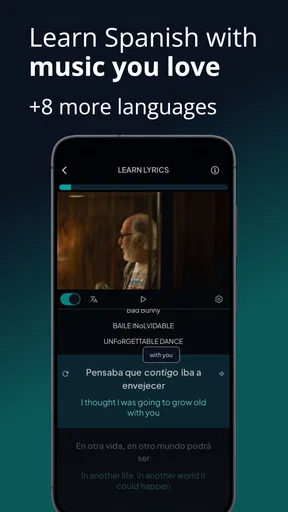
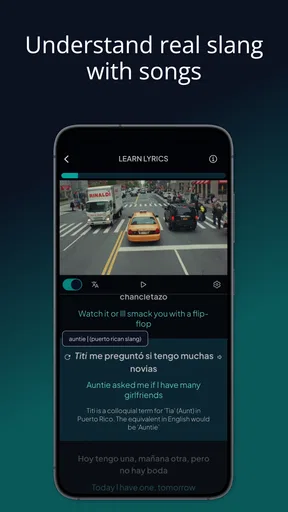
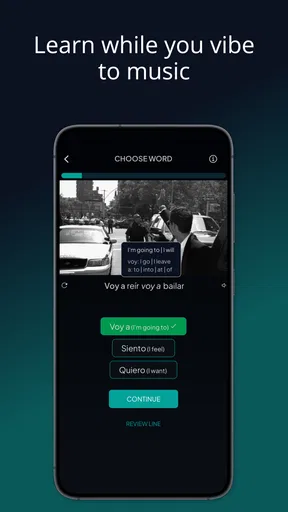
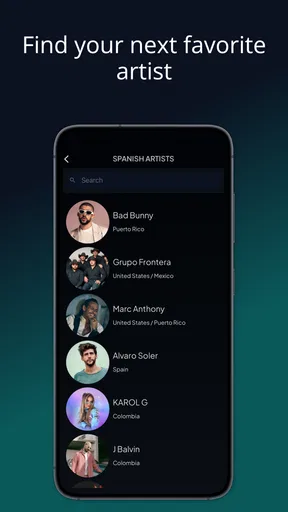
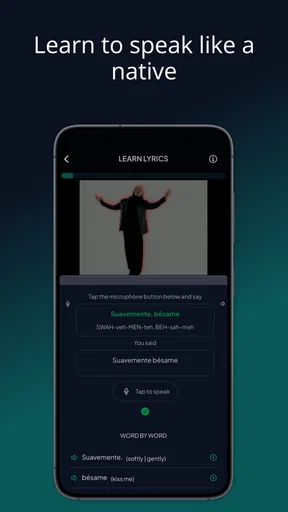
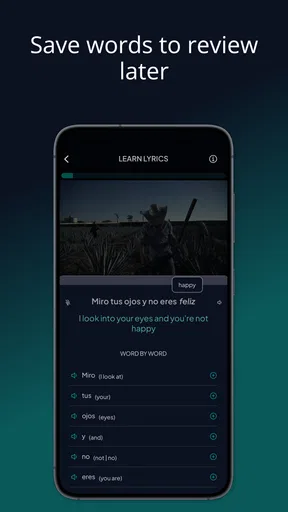
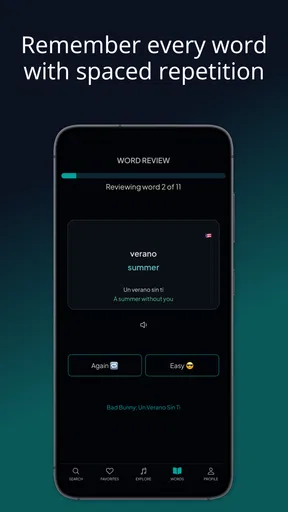
Our Review of LyricFluent: Learn Spanish
 Analysis by Appyee
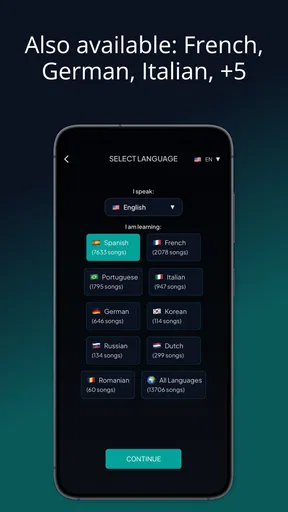
Learning a language through music sounds easy until you try to turn a catchy chorus into something you can actually understand and remember. That is where LyricFluent takes a more focused approach. This free education app from LyricFluent uses songs and their lyrics as the starting point for studying Spanish, while also offering Portuguese, French, Korean and other languages. I found it most useful when I wanted a short, repeatable study session that felt closer to listening for pleasure than completing a formal lesson.
The important thing to understand before installing it is that this is not a complete replacement for a structured language course. It does not magically cover every part of Spanish, and music can sometimes be vague, fast or grammatically unusual. Instead, it gives you a practical bridge between passive listening and active study. You hear language in context, look closely at the words, and return to the same material until phrases begin to feel familiar.
That makes it especially appealing to beginners who already enjoy music, learners who get bored with flashcards, and intermediate students who want to make listening practice less intimidating. In my experience, the best results come when I treat a song as a small lesson rather than simply pressing play and hoping vocabulary sinks in.
What to expect before your first lesson
The app’s central idea is simple: use music and lyrics to learn. That simplicity is a strength because I did not need to decide between a long list of unrelated exercises. I could begin with something memorable, examine the language, and repeat the parts that caused trouble. The musical setting also gives new words an emotional and rhythmic anchor, which is often easier to recall than an isolated translation.
At the same time, songs are not written like beginner textbooks. Singers shorten sounds, repeat phrases, use slang, and occasionally bend normal sentence patterns for rhythm. A learner who expects every line to behave like a carefully graded textbook example may become confused. I see this as one of the app’s main trade-offs: it offers more natural cultural context than a conventional drill, but it asks you to tolerate ambiguity and revisit difficult lines.
The app is listed as free, although in-app purchases range from $3.99 to $69.99 per item. That means I would begin with the free experience and only consider paying after deciding whether the music-based method fits my habits. The price label itself should not be mistaken for a promise that every part of the learning experience is unrestricted. For a first-time user, the sensible approach is to explore the opening workflow, test whether the available material suits your language goal, and then make a decision based on actual use rather than assumption.
Its age rating is Everyone 10+, so parents and younger learners should still use ordinary judgment about the songs selected and the themes they contain. The app runs on Android from version 7.0 onward. On the Android listing, the current version is 3.369.0, which is useful to know when checking whether your device is ready before troubleshooting the learning experience itself.
The public response is encouraging: it has a 4.8 average from around four thousand ratings, with more than one hundred thousand installs. I would treat that as a sign that the basic concept works for many people, not as proof that it will match every learner. Someone who dislikes studying through music may find the method distracting, while someone who already listens to Spanish regularly may appreciate the extra structure.
Who gets the most from the music-first method
I would recommend trying it if your biggest problem is consistency. A ten-minute session around one song can feel more approachable than opening a large course and wondering where to begin. It also suits learners who want to improve recognition of connected speech. In ordinary conversation, words do not arrive as neat dictionary entries, and singing can train your ear to notice recurring sound patterns even when the tempo is challenging.
It is less suitable as your only tool if you need a systematic path through verb conjugations, pronunciation theory, writing correction or conversation feedback. A traditional course is usually better for building a carefully ordered foundation. A tutor or speaking exchange is better when your main goal is producing spontaneous Spanish. I see LyricFluent as a companion that makes listening and vocabulary practice more personal, not as a single app that replaces every other form of study.
From installation to a meaningful first success
Before I settle into a routine, I’d make the first session a small experiment: choose a song whose melody I already know, then see whether the lyrics help me catch a phrase I previously heard only as sound. That gives me a personal baseline without turning the app into a test. Once I know which parts feel manageable and which need another listen, I can move on to choosing a focused target for practice.
Start with a small, familiar target
After installing it, I would resist the temptation to choose the most impressive or fastest song available. For a first session, a track with a clear chorus and a manageable pace is a better choice than one that sounds exciting but leaves every line blurred. Familiarity helps too. If you already know the melody, your attention can move toward the language instead of trying to follow the music and the words at the same time.
Choose one language and keep the first goal narrow. Do not aim to understand the entire song immediately. A more realistic target is to recognize a handful of repeated expressions by the end of the session. This is one of the most useful adjustments I made: measuring success by improved recognition, rather than by completing a large amount of content.
Once a song is open, I recommend listening once without stopping. The first pass is not a test. It gives you a rough sense of the rhythm, repeated sections and places where the singer compresses sounds. On the second pass, pay attention to the lyrics and pause mentally at lines that seem familiar but not fully clear. Those are often the best study opportunities because you already have a partial foothold.
Turn one chorus into an active exercise
The first meaningful success should be something you can demonstrate to yourself. Pick a short repeated section and listen to it several times while following the words. Then look away from the lyrics and try to identify when that section begins. If you can recognize it and understand even part of its meaning without translating every word, you have completed a real listening step.
I find it helpful to separate three questions: What sounds familiar? What can I identify in writing? What do I actually understand? These are different skills. Lyrics may make a line look easy while the sung version remains difficult, or you may understand the general idea without being able to reproduce every word. Keeping those stages separate prevents unnecessary frustration.
A practical routine is to work on one verse or chorus, note two or three expressions worth remembering, and then return to the song later in the day. The second visit is often more valuable than extending the first session. Music gives you a built-in memory cue, so spacing your listening can reveal whether the phrase stayed with you after the screen was closed.
A realistic everyday scenario
Imagine that I have a bus ride before work and only a short period of attention available. I can choose one Spanish song the night before, listen once during the ride, and focus on its recurring chorus on the way home. Rather than trying to translate every line, I identify a few phrases, notice how they sound when sung, and see whether I can recognize them on the next listen. The following morning, I replay the same section before choosing anything new.
This routine works because it removes the decision fatigue that often ruins language practice. I am not searching for a new lesson every day or trying to maintain a complicated study plan. The song supplies repetition, while the lyrics give that repetition a purpose. If I miss a day, I can return to the same material without feeling that I have fallen irreversibly behind.
The same workflow can fit cooking, walking or a quiet evening at home. I would not use it while driving, cycling in traffic or doing anything that requires full attention. Listening practice is useful, but it should never compete with safety.
Where beginners commonly get confused
The biggest confusion is assuming that seeing a translation equals learning the phrase. It does not. A translation can help you grasp the meaning, but recognition, pronunciation and recall still require repeated listening. I try to use the lyrics as a guide, then gradually depend less on them. If I keep reading every line from start to finish, I may feel productive without actually training my ear.
Another difficulty is the difference between a literal translation and the feeling of a line in context. Songs often use expressive wording, repetition or imagery. When a phrase seems strange, I avoid memorizing it as a universal sentence pattern. I first ask whether it is a useful everyday expression, a poetic choice or simply a line that works inside that song. This keeps music from teaching me an unusual phrase as if it were the most normal way to speak.
Pronunciation can also be misleading. A singer may stretch a vowel, swallow a consonant or connect words for musical reasons. I use the sung version to improve listening, but I do not copy every vocal flourish as ordinary speech. For clearer pronunciation, I repeat the phrase slowly in my own voice and compare the overall sound rather than imitating the performance exactly.
Finally, I would not judge progress by how much of a song I can recite. Memorizing a chorus is satisfying, but it is not the same as being able to use its vocabulary in a new sentence. After learning a phrase, I try to create a simple personal example. If I cannot do that, I treat the phrase as listening vocabulary for now instead of claiming that I have fully mastered it.
How to build a better second week
After the first few sessions, the most effective next step is not necessarily choosing more songs. It is comparing what happens when you revisit an old one. If a line that once sounded like a blur now separates into recognizable words, that is valuable progress. I would keep a small list of these breakthroughs, because they are easier to notice than broad claims such as “my listening is better.”
Use new songs to widen your exposure, but use familiar songs to measure improvement. A new track tests your ability to cope with unfamiliar language. An old track shows whether repeated listening has changed what your ear can catch. Mixing both prevents the routine from becoming either comfortable repetition or constant difficulty.
One non-obvious advantage of this method is that it can reveal which vocabulary you recognize only because of the melody. Try hearing a phrase without immediately relying on the chorus around it. If recognition disappears outside the musical pattern, the word is not yet stable. That is a useful signal to review it separately through another learning resource or a personal sentence.
Another helpful trade-off concerns speed. Slowing everything down may make the lyrics easier, but it can also create a listening experience that does not resemble real music or conversation. I prefer to use slower playback only to inspect a troublesome line, then return to the normal performance to check whether I can still hear it. The goal is not permanent dependence on a reduced pace.
How it compares with ordinary language apps
Compared with a standard vocabulary app, LyricFluent gives words a stronger emotional and auditory setting. A flashcard can show a word quickly, but a song can attach it to rhythm, repetition and a memorable situation. That makes the music approach particularly good for expressions that you want to recognize naturally rather than memorize as a list.
The conventional alternative is usually more predictable. It may introduce grammar in a sequence, test recall directly and make progress easier to quantify. If you need that clear curriculum, this app may feel loose. It can also be less efficient when you want to learn a specific set of travel phrases or prepare for an exam, because a song’s vocabulary follows the artist’s subject rather than your immediate needs.
Compared with podcasts or ordinary music with lyrics, the advantage here is intention. You are not merely consuming audio; you are turning selected lines into study material. Compared with a tutor, however, it cannot react to your mistakes or explain why your own sentence sounds unnatural. My preferred combination is to use music for repeated listening and motivation, then use a structured course, reference or conversation partner for grammar and active speaking.
When I would skip it
I would skip this app if I strongly dislike learning through repetition or if I need immediate speaking practice. I would also be cautious if my only goal were formal accuracy from the beginning. Songs can introduce informal wording and poetic constructions before I have enough grammar to understand them comfortably.
It may not be the right first choice for someone who wants a daily checklist with a tightly controlled sequence. The music-first format asks me to make small decisions: which song to use, which lines matter, and when a phrase is worth revisiting. That freedom is motivating for some learners and tiring for others. If I know that I abandon open-ended study tools, a more structured alternative should come first.
For a learner who already has basic Spanish and wants to make listening more enjoyable, though, the balance changes. The app can provide a refreshing break from exercises while still keeping attention on real language. I would especially use it during periods when motivation is low, because a song can get me started more easily than a formal lesson.
My recommendation for the first month
I would begin with short sessions and one clear objective per song. During the first week, focus on recognizing repeated phrases. During the next, revisit those songs and test whether you can understand the same lines with less support. Then add a new track while keeping one familiar track in rotation. This creates a simple contrast between discovery and review.
Keep expectations realistic. If you understand only the general idea of a chorus at first, that is still useful listening practice. If a song remains incomprehensible after several attempts, change the song rather than blaming yourself. Difficulty can come from tempo, vocal style or unusual wording, not just from your current level.
My final view is that this is a worthwhile free starting point for learners who connect with music and want a gentler route into Spanish listening. The strongest result comes when I use it actively: listen, follow the lyrics, isolate a short section, return later, and test recognition without reading. Its real value is not that songs make language learning effortless, but that they make repeated listening easier to sustain.
I would install it as a companion rather than my entire language plan. Use a structured resource when you need grammar and progression, and use conversation practice when you need to speak. For the learner who wants a memorable first success, however, choosing one approachable song and recognizing a few meaningful phrases by the end of the session is a reassuring place to begin.
Verdict
Strengths of LyricFluent: Learn Spanish
- Short song-based lessons make Spanish practice feel engaging.
- Lyrics help reinforce vocabulary, pronunciation, and listening skills.
- Useful for learners who enjoy music and want flexible study sessions.
- Progress tracking makes it easier to maintain a regular learning routine.
- Can expose users to natural phrases used in Spanish-language songs.
Limitations of LyricFluent: Learn Spanish
- Learning may depend heavily on music preferences and available song content.
- Lyrics alone may not provide enough structured grammar instruction.
- Some features or lessons may require a paid subscription.
- Fast vocals and slang can be difficult for beginners to understand.
- An internet connection may be needed for streaming lessons and songs.
Similar Picks in This Category
View All
Duolingo: Language Lessons
Duolingo4.7

Google Classroom
Google LLC2.8

Unacademy: Learn & Crack Exams
Unacademy3.2

Bible App for Kids
Life.Church4.4

Cake - Learn English & Korean
Cake Corp.4.7

Brainly: AI Homework Helper
Brainly4.5
Frequently Asked Questions
What is LyricFluent: Learn Spanish, and how does it help with language learning?
LyricFluent: Learn Spanish is an educational app that uses Spanish songs and lyrics to make language practice more engaging. It can help learners build vocabulary, recognize common expressions, improve listening comprehension, and become more familiar with pronunciation through music. The app is best used as a supplementary learning tool rather than a complete Spanish course, especially for grammar, speaking practice, and structured progression.
Is LyricFluent: Learn Spanish suitable for beginners?
The app can be useful for beginners because songs provide repeated exposure to everyday words and phrases, while the lyric-based format makes practice feel less like traditional studying. However, complete beginners may need additional explanations of pronunciation, verb conjugation, and sentence structure. Users who already know basic Spanish will likely get more immediate value from translating lyrics, following along, and identifying familiar expressions in context.
Does LyricFluent: Learn Spanish require an internet connection?
An internet connection may be needed to access song content, load lyrics, synchronize learning materials, or use certain interactive features. Whether lessons remain available offline can depend on the specific version of the app and the content being used. Before relying on it while traveling or studying without mobile data, check the app’s current store description and test whether selected songs or exercises can be opened offline.
Is LyricFluent: Learn Spanish free to use, or does it include paid features?
The app’s availability and pricing can vary depending on the platform, region, and the current version published by its developer. Some features or learning content may be accessible for free, while additional songs, exercises, or an ad-free experience could require an in-app purchase or subscription. Review the pricing details in the Google Play Store or Apple App Store before downloading, particularly if you prefer not to start a trial.
Can LyricFluent: Learn Spanish replace a Spanish course or tutor?
LyricFluent: Learn Spanish is more effective as a fun supplement to regular study than as a complete replacement for a course or tutor. Music can improve listening habits, vocabulary recall, and familiarity with natural phrasing, but it may not provide enough structured grammar, conversation practice, writing feedback, or personalized correction. For balanced progress, combine the app with speaking exercises, reading, grammar study, and real conversations.
